 NERDAGES™
Xbox Nano Controller Review: More Nano Than Controller
Eric Poole | Posted: 11/05/2026
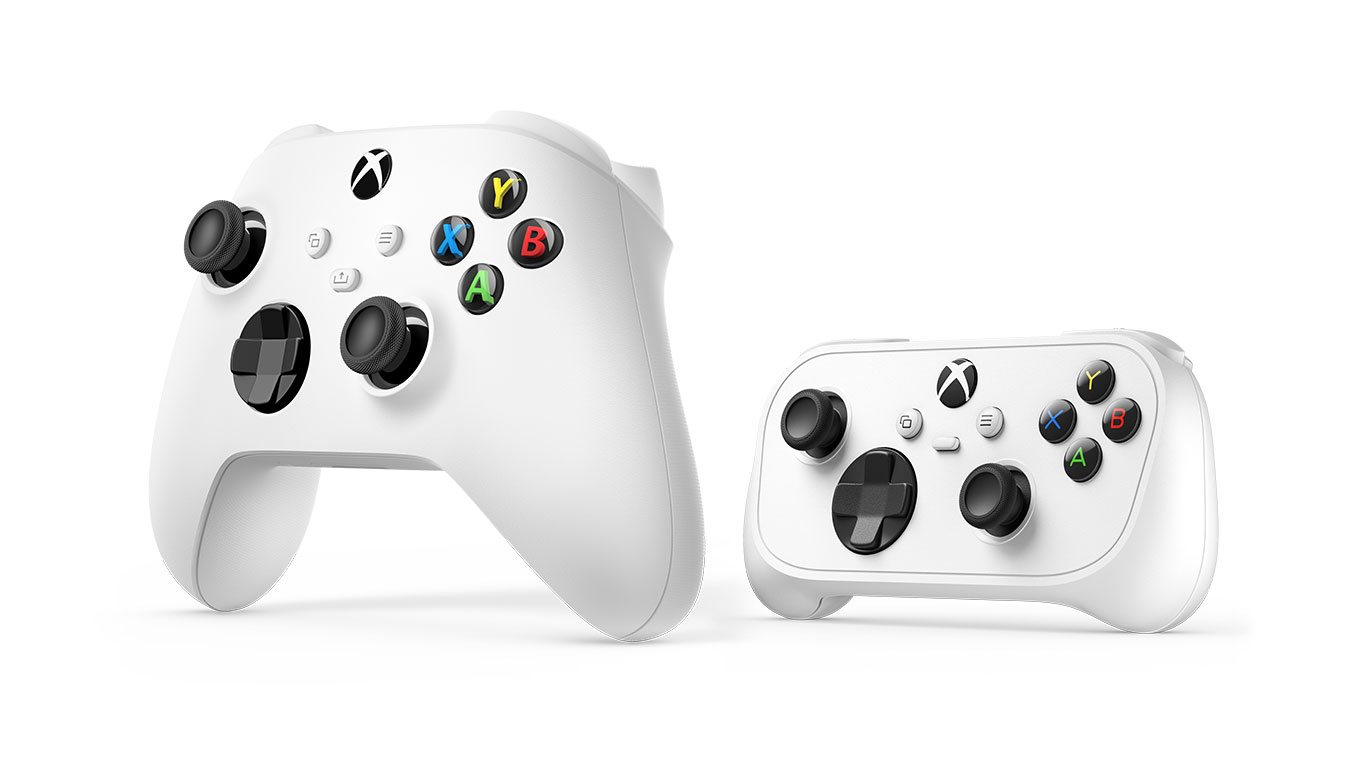
(Image credit: XBOX)
I've spent the better part of a day with Microsoft's latest first-party controller for Xbox and PC, the Xbox Nano Controller. And I have to admit, I was equal parts skeptical and intrigued when this little thing was announced.
I'm primarily a PC gamer who prefers a good old-fashioned mouse and keyboard. However, certain games, particularly Souls games, just feel better with a controller in hand. I also travel quite a bit with my Alienware X14 thin-and-light gaming laptop, so finding ways to enjoy PC gaming on the go without turning my backpack into a portable gym has become something of a personal mission.
Enter the Xbox Nano.
Microsoft's latest controller promises a familiar Xbox gaming experience in a dramatically smaller package. But is shrinking an already perfectly good controller really a solution to a problem anyone was having?
Apparently, I was curious enough to find out.
Honey, I Shrunk the Controller
The Xbox Nano Controller is exactly what it sounds like. It's a smaller, thinner, significantly lighter Xbox controller. And, dare I say it, the thing is just downright cute.
Right out of the box, its almost comically low weight is immediately noticeable. My scale puts the Nano at a measly 103 grams. For reference, my fairly standard Motorola Razr smartphone weighs just over 250 grams with its case.
That means this little guy weighs less than half as much as the phone I carry around every day.
Microsoft wasn't kidding about portability.
Despite its tiny dimensions, the Nano manages to squeeze in the familiar Xbox controller layout, including the analog sticks, directional pad, triggers, bumpers, and face buttons. In other words, Microsoft managed to squeeze the essentials of what makes an Xbox controller an Xbox controller into something that looks like it belongs in a Happy Meal.
And I mean that in the nicest possible way.
For someone frequently stuffing a gaming laptop, charger, mouse, headphones, and an assortment of other nerdy necessities into a backpack, carrying a controller that adds virtually no noticeable weight is genuinely appealing.
But portability doesn't mean much if the thing is miserable to play games with.
Which brings us to the important question.
But Can It Even Game, Bro?
Before getting into gameplay, there's something you should know about me.
I'm six and a half feet tall, left-handed, and have what can only be described as alien-like long hands. I'm also not particularly fond of traditional game controllers to begin with.
In other words, I'm probably the last person Microsoft had in mind when designing the Nano.
I recently finished Gears of War: E-Day using my Xbox Elite controller, so returning to Sera seemed like the perfect way to test whether this miniature gamepad could actually hold its own.
My first impressions weren't particularly encouraging.
The shoulder bumpers immediately felt a little strange. Unlike a traditional Xbox controller, where I can comfortably press almost anywhere along the bumper, the Nano seems to require me to press closer to the innermost corner for a satisfying click.
With my oversized hands already struggling to find a natural resting position, I was preparing myself for an evening of missed reloads, questionable aiming, and a whole lot of Locust-related embarrassment.
Then something surprising happened.
I started playing.
And almost immediately, I was back to gnashing Grubs, landing active reloads, and generally making a mess of everything unfortunate enough to crawl out of the ground.
Somehow, this ridiculous little controller just works.
The analog sticks felt more usable than their size initially suggested, the face buttons were easy enough to navigate, and the overall experience was surprisingly familiar once I stopped thinking about how tiny everything was.
That's probably the Nano's greatest accomplishment.
Despite looking and feeling like someone left an Xbox controller in the dryer too long, it manages to deliver an actual, enjoyable gaming experience.
I wouldn't necessarily choose it for a competitive shooter, but for casually tearing through Locust on a laptop in a hotel room?
Absolutely.
Unfortunately, the honeymoon didn't last forever.
After roughly an hour of gameplay, the Nano's compact dimensions started taking a toll on my hands. There's simply not much controller to hold onto, and squeezing my oversized fingers around its tiny frame eventually became uncomfortable.
To be fair, even my considerably larger Xbox Elite and PlayStation DualSense controllers tend to leave my hands feeling a little tingly after a couple of hours.
The Nano just gets me there a bit faster.
That's not necessarily a failure of the product. It's a reminder that making something smaller almost always involves compromise.
And in this case, that compromise is comfort.
What This Controller Isn't
Let's get something straight.
The Xbox Nano isn't trying to replace your Elite controller, DualSense, or even Microsoft's standard Xbox Wireless Controller.
And it shouldn't.
If you're an aspiring esports professional spending six hours a day perfecting your competitive shooter skills, I seriously doubt you're shopping for a controller that could comfortably fit inside a jacket pocket.
The Nano simply doesn't offer the same ergonomics or sense of precision that I'd want from a primary competitive gaming controller. Its small bumpers and cramped grip are particularly noticeable if you have larger hands.
Long gaming sessions aren't its strong suit either.
But here's the thing: not every gaming accessory needs to be designed for competitive play or marathon sessions.
Some products exist to solve very specific problems.
And the Nano solves one of mine.
I wanted a controller that could live in my laptop backpack without adding unnecessary bulk or weight, something I could pull out during a flight, in a hotel room, or whenever mouse-and-keyboard gaming isn't particularly practical.
For those situations, the Nano makes a lot of sense.
If you primarily game at home, already have a perfectly good controller, and rarely travel, there's probably little reason to buy one.
Likewise, if you have particularly large hands and comfort is your biggest priority, I'd suggest looking elsewhere.
On the other hand, gamers with smaller hands may find the Nano considerably more comfortable than I did.
After all, not everyone was built like an NBA center with E.T.'s fingers.
Thinking Outside the Xbox
Now here's where my inner nerd starts getting excited.
Because the Nano is an incredibly lightweight, PC-compatible controller, my mind immediately started wandering beyond gaming.
I'm a software engineer who spends a fair amount of time developing automations, and I can't help wondering what else I could control with this thing.
Could I map its buttons to custom keyboard shortcuts? Trigger scripts? Control a few of my work-related automations from a ridiculously tiny Xbox controller?
You can probably guess what I'll be experimenting with this weekend.
There's something wonderfully unnecessary about the idea of triggering a sophisticated automation workflow using a controller that looks like it belongs in a child's toy collection.
But that's half the fun of being a nerd.
The Nano also offers direct Wi-Fi connectivity for supported cloud gaming experiences, opening the door to some interesting possibilities beyond traditional console and PC gaming. I haven't spent enough time exploring that functionality to offer much of a verdict, but it's another feature I'll be experimenting with.
Of course, none of these unconventional applications are particularly good reasons for the average person to rush out and buy one.
But for those of us who enjoy finding creative solutions to problems nobody asked us to solve, the Nano has some intriguing potential.
The Verdict: Small Controller, Big Enough Ambitions
The Xbox Nano Controller is a strange little product.
On paper, it seems almost unnecessary. Microsoft took a perfectly functional controller, made it significantly smaller, sacrificed some ergonomics, and somehow created something I actually want to keep in my backpack.
It's not the most comfortable controller I've ever used. The shoulder bumpers could be better, and I certainly wouldn't recommend it for extended gaming sessions, especially if your hands are anywhere near the size of mine.
But I also can't ignore how surprisingly well it performs.
Within minutes of picking it up, I was comfortably playing Gears of War: E-Day, hitting active reloads, and enjoying myself far more than I expected.
That's impressive for a controller weighing barely more than 100 grams.
The Nano isn't necessarily an impulse purchase, particularly when full-sized controllers are frequently discounted. You're paying for portability, not improved performance.
And that's perfectly fine, provided portability is what you actually need.
If you're a frequent traveler, a laptop gamer trying to minimize backpack clutter, or someone with smaller hands looking for a more manageable Xbox controller, the Nano deserves some consideration.
I'd recommend picking up a small protective travel case as well. While the controller itself barely takes up any space, I'd rather not have those tiny analog sticks getting crushed underneath my laptop charger.
For everyone else, your regular Xbox controller is probably still the better choice.
The Nano isn't a better controller because it's smaller.
It's a good controller despite being smaller.
And for the particular kind of nerd who values portability over everything else, that might be more than enough.
Sometimes, less really is more.
Even when there's considerably less to hold onto.